The Final Encore: The Haunting Untold Story of Conway Twitty’s Last Night
Forty number-one hits—more than Elvis Presley. While the world saw a country music titan, Conway Twitty’s final hours revealed the man behind the legend: a performer who refused to let the music stop, even when his body was failing.
On June 4, 1993, in the neon-lit heart of Branson, Missouri, Conway Twitty walked off the stage at the Jim Stafford Theatre. He had just delivered another signature performance—smooth, soulful, and commanding. To the fans in the front row, he looked like the same “High Priest of Country Music” they had loved for decades.
But behind the scenes, a “ticking time bomb” was about to change country music history forever.

Music & Audio
Video
More Than Elvis: The Legend of 40 Number Ones
Before he was Conway Twitty, he was Harold Lloyd Jenkins. He famously plucked his stage name from a map—Conway, Arkansas, and Twitty, Texas. That name would go on to grace more number-one singles than almost any artist in history at the time.
Twitty wasn’t just a singer; he was a machine of discipline.

-
The Work Ethic: He performed over 300 nights a year.
-
The Connection: He turned simple love songs into private confessions for millions.
-
The Legacy: 40 #1 hits, surpassing the King himself, Elvis Presley.
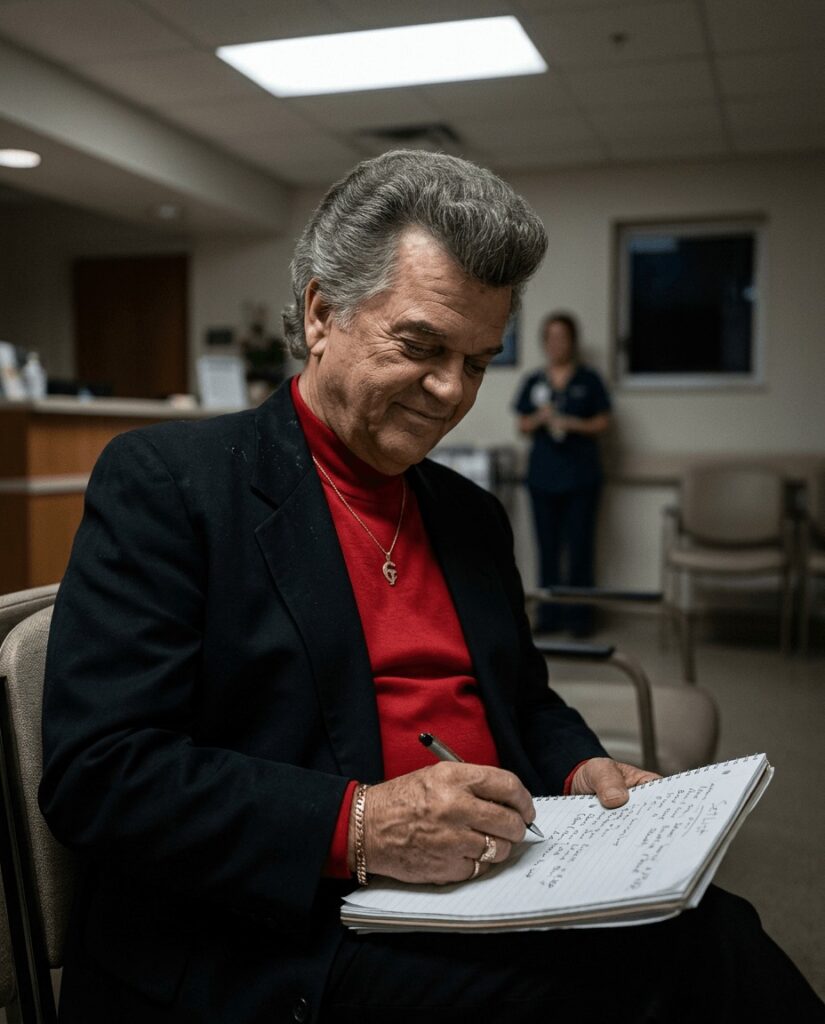
“There Are Shows to Do”: The Warning Signs
For weeks leading up to that fateful Branson trip, those closest to Conway noticed something was off. He had been complaining of persistent stomach pain. In the world of a legendary road warrior, however, pain was just an inconvenience.
His mantra was always the same: “There are shows to do.”
This wasn’t ego; it was loyalty. To Conway, a ticket sold was a promise made. He pushed through the discomfort, fueled by a deep-seated belief that the audience deserved 100% of his soul, every single night.
🤠 COMMUNITY VOICE
Who do you think deserves the crown for the Ultimate Country Legend?
Submit & See ResultsThe Sudden Tragedy on the Tour Bus
The end didn’t come on stage under the spotlights. It happened in the quiet, cramped quarters of his tour bus.
Shortly after the Branson show, Conway doubled over in agonizing pain. The “stomach ache” he had brushed off was actually a ruptured abdominal aortic aneurysm.

He was rushed to a hospital in Springfield, Missouri. The man who had spent his evening planning “Number 41” was suddenly fighting for his life. Despite the best efforts of surgeons, the damage was too severe. Conway Twitty passed away the following morning, June 5, 1993, at the age of 59.
The Detail That Lingers: Planning for Tomorrow
What makes Conway Twitty’s death particularly poignant isn’t just the loss of a voice—it’s the state of mind he was in when he left.
His final conscious hours weren’t spent reflecting on his 40 number-one hits or his Hall of Fame legacy. He was planning the next setlist. He was discussing song arrangements with his band, debating which tracks would hit hardest at the next stop.
“He died in motion,” fans often say. He wasn’t a man looking at the rearview mirror; he was looking at the road ahead.
Why Conway Twitty Still Matters
Even decades later, the “High Priest of Country Music” remains a pillar of the genre. From the rockabilly energy of “It’s Only Make Believe” to the sultry storytelling of “Hello Darlin’,”宣 Conway Twitty’s voice was the soundtrack to American life.
He didn’t get to write a grand farewell or perform a “final tour.” His life ended exactly how he lived it: working, dreaming, and dedicated to the craft.
Conway Twitty didn’t just sing country music—he lived the loyalty and heartbreak he sang about. And though the music stopped that morning in Springfield, the 40 songs he left at the top of the charts ensure his voice will never truly go silent.