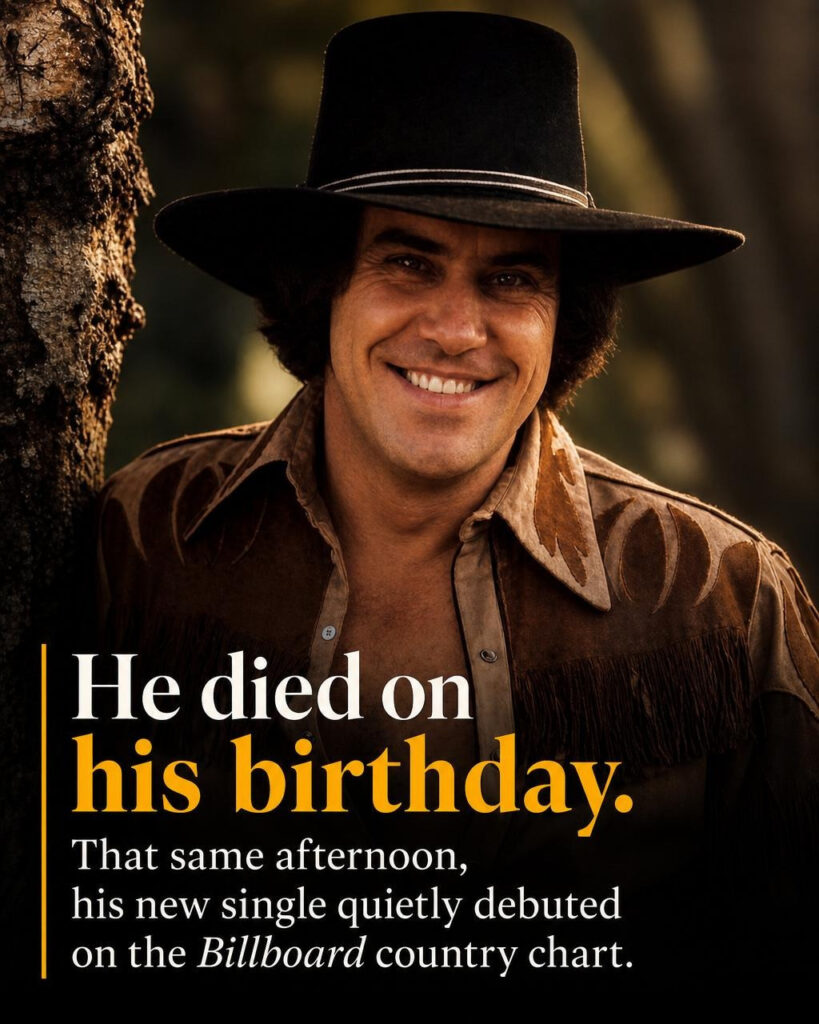
The history of country music is filled with heartbreak, but few stories are as chillingly poetic or deeply tragic as that of Mel Street. On the morning of his 43rd birthday, while his brand-new single was making its debut on the Billboard charts, the honky-tonk star chose to silence his voice forever.
Behind the flashing lights of Nashville and the roaring applause of fans lay a dark, solitary battle with depression and alcoholism—a battle that ultimate success could not win.
A Voice Honed in Honky-Tonk: The Man Who Earned George Jones’ Highest Praise
Born King Malachi Street in 1935, Mel Street possessed a raw, emotive baritone that didn’t just sing lyrics—it lived them. He was the definition of hard country, delivering tales of heartbreak, lonely nights, and blue-collar struggles with absolute authenticity.

Throughout the 1970s, Street was a mainstay on country radio, racking up 13 top-20 hits. His definitive masterpiece, “Borrowed Angel” (1972), climbed all the way to No. 7, cementing his place among country music royalty.
Street’s talent was so undeniable that George Jones—often cited as the greatest country singer of all time—openly declared Mel Street to be his absolute favorite honky-tonk vocalist. To earn that level of reverence from “The Possum” himself meant you were the real deal.

Music and Audio
Behind the Curtain: Depression, Alcohol, and the Lonely Road
To the public, Mel Street was a rising star in his prime. But offstage, his life was rapidly fracturing.
-
Clinical Depression: A heavy, silent darkness followed him despite his growing fame.
-
Severe Alcoholism: Like many of his peers, Street used alcohol to numb his pain, a temporary fix that only deepened his emotional spiral.
-
The Toll of the Highway: Spending months on end in a tour bus, isolated from his family, eroded the singer’s fragile mental state.
For Mel Street, the chart numbers and industry accolades weren’t enough to fill the growing void inside.
October 21, 1978: A Heartbreaking Birthday Paradox
The morning of October 21, 1978, started like any other autumn day in Hendersonville, Tennessee. It was Mel’s 43rd birthday. Those close to him recalled that he spoke to his wife normally, showing absolutely no warning signs or unusual behavior.
🤠 COMMUNITY VOICE
Who do you think deserves the crown for the Ultimate Country Legend?
Submit & See ResultsBy that afternoon, however, the internal storm finally broke. Mel Street died at his home from a self-inflicted gunshot wound.
The most haunting detail of his passing happened that very same day: His new single, ironically titled “Just Hangin’ On,” quietly made its debut on the Billboard country chart.
The title felt like a devastating, retrospective cry for help—the final words of a man who had tried his hardest to hold on but simply couldn’t anymore. Compounding the tragedy, the B-side of that vinyl record was titled “The Shady Side of Charlotte,” a eerie nod to the dark side of his own reality.

A Legend’s Final Farewell
The country music community was shattered by the news. At Street’s funeral in Hendersonville, the grief was palpable. Devastated by the loss of his close friend and mentee, George Jones stepped up to the casket and sang a powerful, tearful rendition of “Amazing Grace.”
Having battled his own severe demons with substance abuse and depression, Jones understood better than anyone the monster Mel had been fighting. His tribute was more than a performance; it was a deeply personal farewell to a kindred spirit.
Legacy of a Battered Angel
Nearly five decades later, Mel Street’s music still resonates deeply with traditional country purists. His tragic end on October 21, 1978, remains a stark, haunting reminder of the cost of fame. It serves as a permanent testament that behind the most beautiful, soulful melodies, there is often a heart that is quietly breaking.