
“How Alan Jackson saved traditional country music in the 90s.”
The 1990s were supposed to be a bright, forward-looking decade for country music—but instead, they often felt like a tug-of-war between two worlds. One world wanted polish, pop-friendly hooks, and radio-sized sounds. The other wanted honky-tonk grit, fiddles that sounded like they came from front porches, and lyrics that treated everyday life as worthy of big emotions. In the middle of that collision stood one of the most reliably authentic voices of the era: Alan Jackson. And the deeper story isn’t just that he made hits. It’s that he helped pull traditional country back from the edge—by making it commercially viable again, emotionally relevant again, and culturally cool again.
The 1990s Country Music Landscape: A Defining Era

By the time the 1990s rolled in, country music had already undergone multiple transformations. The 1980s had introduced a sharper shine—new production techniques, crossover ambition, and an expanded audience that didn’t always know what to do with steel guitar when it sounded too “back home.” Then the ’90s arrived with even more pressure. Radio programmers, label executives, and the emerging mainstream pop ecosystem increasingly rewarded songs that fit standardized formats: a tight runtime, a hook you could hum after one listen, and a sound that blended easily into other genres. It wasn’t that country artists abandoned tradition entirely—but the incentives shifted. If your sound sounded “too old-fashioned,” it could mean you were considered risky.

What I find most interesting is how this landscape created a vacuum—not for quality, but for identity. Fans who loved classic country didn’t disappear; they were simply treated like a niche. Meanwhile, younger listeners who weren’t raised on the older styles were being offered a version of country that sometimes felt like it was borrowing the costume without fully carrying the soul. That tension set the stage for someone like Alan Jackson, because he didn’t just perform “traditional” music as an aesthetic. He performed it as an attitude—confident, grounded, and emotionally specific.
In other words, the decade wasn’t only a battle of sounds; it was a battle of meaning. Who did country music belong to? Was it a modern entertainment product or a living storytelling tradition? The most defining part of How Alan Jackson saved traditional country music in the 90s is that he answered that question with results. He proved that traditional country didn’t have to stay stuck in the past—it could thrive in the present, on major-label stages and mainstream radio.

Alan Jackson’s Rise: A Voice for Authenticity
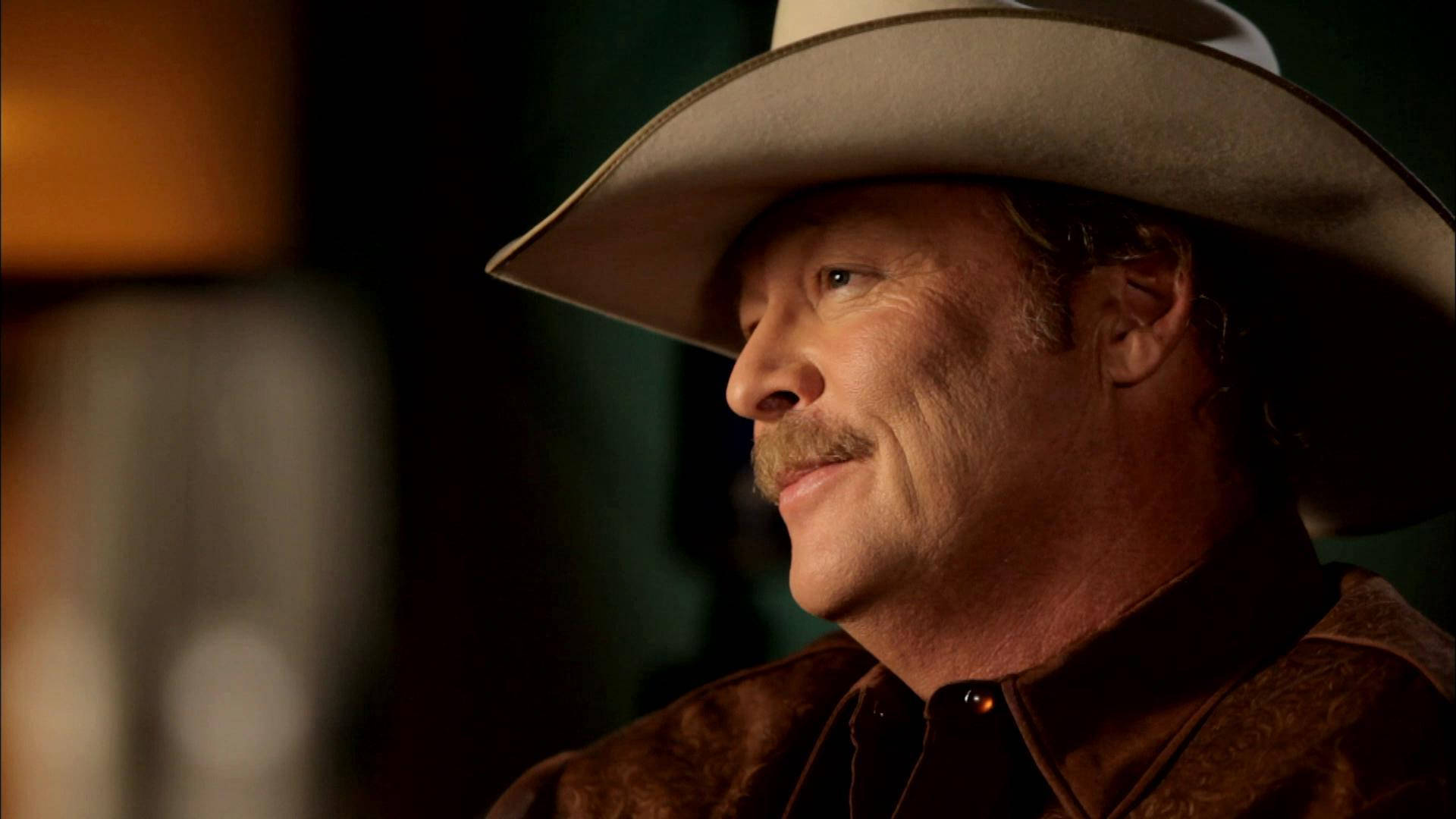
Alan Jackson didn’t explode into fame through gimmicks or manufactured controversy. His rise was powered by a simple, repeatable strength: he sounded like himself, even when the industry around him was trying to standardize what “country” should sound like. That matters because authenticity in music isn’t just about how an artist dresses or what they say in interviews. It’s about tone, phrasing, and the emotional timing of a performance—the way you land a line, stretch a vowel, or make a chorus feel earned instead of engineered.
When listeners first encountered Jackson in the early part of the decade, the response made sense. He had the kind of voice that felt familiar without sounding stale. It carried the warmth of plainspoken sincerity, but it wasn’t overly polished into something lifeless. As he built his catalog, he used classic country architecture—verse, story, turn, release—while still navigating the expectations of major-market production. To me, that blend is the secret: Jackson didn’t reject modern success; he adapted modern success to serve a traditional core.
His authenticity also showed up in how he approached material. Instead of leaning on abstract metaphors or vague emotional slogans, Jackson often wrote (or selected) songs that acted like snapshots—moments you could recognize even if you hadn’t lived them. That’s a powerful form of credibility. Fans don’t have to be from the exact same town to feel like the songwriter is speaking from experience. When you’re building a career in a decade of shifting tastes, that credibility becomes a kind of currency.
🤠 COMMUNITY VOICE
Who do you think deserves the crown for the Ultimate Country Legend?
Submit & See ResultsAnd as Jackson gained momentum, it created a ripple effect. Other artists and audiences began to notice that traditional country wasn’t a museum piece. It was a living language. That’s how How Alan Jackson saved traditional country music in the 90s became more than a narrative—it became a movement of listener expectations.
Resurgence of Traditional Sounds: Jackson’s Impact on the Charts

One of the biggest reasons traditional country struggled in the ’90s was that chart success increasingly defined what was “valid.” If the traditional sound didn’t perform strongly enough, labels were less willing to invest, radio was less willing to play, and the cycle tightened. Jackson’s impact was significant because he broke that cycle. He didn’t just succeed in a traditional lane—he made that lane a chart lane.

When you look at the landscape through the lens of radio charts, it becomes clear why his success mattered. Country radio could have treated traditional styles as background flavor while pushing listeners toward a more cross-genre production style. Instead, Jackson’s mainstream visibility sent a different message: traditional country could still dominate airtime and sales. That realization didn’t stay isolated. It encouraged industry players to reconsider what kinds of songs were worth promoting.
In my view, the most impressive part of Jackson’s chart impact is that it wasn’t achieved by flattening tradition. Some artists respond to mainstream pressure by sanding down their differences until they fit the mold. Jackson did the opposite: he used mainstream platforms while keeping his musical identity largely intact. The result was that listeners who might have been taught to distrust traditional country were suddenly confronted with a version of it that felt current, confident, and unmistakably alive.
It’s also worth noting that “traditional” isn’t one sound—it’s a set of values about songwriting craft, instrumentation, and emotional realism. Jackson’s work helped re-normalize classic elements like steel guitar, fiddles, and honky-tonk rhythms as mainstream-friendly rather than nostalgic relics. That shift influenced not only chart outcomes but also what audiences expected from future country releases.
So when people ask what How Alan Jackson saved traditional country music in the 90s really means, it’s not limited to cultural admiration. It’s about market dynamics. Jackson proved that tradition could still win, and in the music industry, “winning” is what changes incentives for everyone else.
Lyrical Prowess and Storytelling: The Heart of Jackson’s Appeal
For all the discussion about production and instrumentation, country music is ultimately judged by its stories. Alan Jackson’s genius—at least to my ears—was how he made songwriting feel conversational without losing depth. He had a way of writing lyrics that didn’t talk down to listeners. Even when he tackled big emotional themes, the language often felt grounded, like it was coming from the front seat of a car, not a studio boardroom.
His storytelling worked because it was specific. Not in the “you must know every detail to understand” way, but in the “this is a real moment” way. He captured the textures of everyday life: small-town dynamics, the texture of nostalgia, the tension between dreams and hard work. These aren’t abstract ideas. They’re lived experiences translated into melody and rhyme.
What I find especially compelling is that Jackson’s storytelling didn’t depend on shock value. Instead, it often built emotional weight through restraint. He knew when to let a line sit, when to repeat a phrase so it became a refrain of memory, and when to use humor as a relief valve. That balance is rare. Many songwriters either go all-in on sentimentality or chase cleverness at the expense of feeling. Jackson, for much of his early career, found a third path: heartfelt realism.
That lyrical approach also helped traditional country remain attractive to new listeners. When mainstream pop-oriented country songs sometimes leaned into generalized emotions, it could feel like the listener was being asked to “relate” without being given something concrete to grab onto. Jackson’s songs offered scenes. Once you’re offered scenes, you don’t just understand the emotion—you inhabit it.
And this is where How Alan Jackson saved traditional country music in the 90s becomes personally meaningful for many fans. You could hear tradition not just in the instruments, but in the writing craft: the belief that a song should tell a story you remember, not just a chorus you forget.
Beyond the Hits: Influencing a Generation of Country Artists
It’s easy to focus on singles and awards, but cultural influence is bigger than any one track. Jackson’s presence in the ’90s helped establish a blueprint for what a successful traditional-country artist could look like in a modern industry. That blueprint wasn’t “copy Alan Jackson’s sound exactly.” It was a demonstration that you could have commercial relevance without sacrificing the essential traits of country music’s older forms.
When artists are watching what works, they notice more than chart positions. They notice production choices, marketing strategies, and the kind of radio reception that follows specific songwriting approaches. Jackson’s success made it easier for other musicians to justify staying close to their influences—whether that meant leaning harder into classic country instrumentation, writing in a more story-driven style, or trusting a vocal delivery that didn’t sound overly engineered.
I also think there’s a less measurable influence at play: confidence. In a decade where some traditional sounds were dismissed as outdated, Jackson’s mainstream stature validated tradition as a legitimate artistic direction. That can be a psychological turning point for emerging artists. If a label executive tells you the market wants a certain style, the conversation changes when the counterexample is right there, proving that authenticity can sell.
Over time, you can see echoes of Jackson’s approach in how later country artists frame their own songwriting—how they prioritize narrative, how they treat traditional instruments as strengths instead of liabilities, and how they aim for emotional clarity rather than trend-chasing ambiguity. Not every artist followed the same path, but the permission to choose tradition was part of the legacy.
This is why How Alan Jackson saved traditional country music in the 90s feels like more than a headline. It was a bridge between generations: a way for classic country sensibilities to survive the decade’s pressures. When young artists realized the market could embrace those sensibilities, the long-term odds of tradition becoming extinct in mainstream country improved.
And once the odds improve, culture shifts. Not instantly, not perfectly—but enough to keep traditional country from being erased from the conversation.
Alan Jackson’s Enduring Legacy: Preserving the Soul of Country Music
Enduring legacy can be a vague term, but in Jackson’s case it’s grounded in something tangible: he preserved a recognizable “soul” of country music during a time when that soul was at risk of being diluted. The ’90s offered many opportunities for country to evolve, which isn’t inherently bad. Yet evolution without memory becomes something else entirely. Jackson kept memory alive—through songs that sounded like country, felt like country, and spoke in a country way.
Legacy is also about consistency. Jackson didn’t treat tradition as a phase he could discard once the trends shifted. Even as other artists changed directions, Jackson continued to stand for a style of songwriting and performance that valued clarity, honesty, and melodic simplicity without becoming simplistic. That matters because in long careers, an artist either becomes a stable reference point or a constant reinvention. Jackson remained a reference point.
Another part of his legacy is how he handled nostalgia. Nostalgia can either become a comforting loop or a trap that prevents growth. Jackson’s songs often used the past as a lens to understand the present—celebrating roots while still acknowledging the passage of time. That approach kept his music from turning into mere nostalgia cosplay.
From my perspective, the most meaningful outcome of his legacy is that he helped listeners believe they weren’t alone in their tastes. Some fans wanted the music they grew up with; some fans only discovered it later. Jackson provided a doorway for both groups. That’s one reason his impact continues: it wasn’t limited to a narrow audience. It expanded the tradition’s reach.
And perhaps the most important legacy is the cultural permission he gave. When a decade is pushing country music toward mainstream homogenization, one superstar who keeps faith with tradition can change the direction of the industry’s shared imagination. How Alan Jackson saved traditional country music in the 90s isn’t only about preserving an old sound—it’s about preventing an identity crisis.
Today, you can still hear the influence in how country artists talk about authenticity, in how they structure narratives, and in how audiences respond when a song feels like it comes from real life. That is how tradition survives: not by resisting change, but by proving it can coexist with it.
Conclusion
In the 1990s, country music stood at a crossroads where pop-influenced production and industry incentives often threatened to blur the genre’s traditional identity, but How Alan Jackson saved traditional country music in the 90s because he offered mainstream success without surrendering the core values of classic country storytelling, authentic vocal delivery, and chart-worthy traditional instrumentation; through his rise, his impact on radio and sales, his deeply human lyrics, and his influence on later artists, Jackson helped keep the genre’s soul from being replaced by trend, ensuring that traditional country remained not just remembered, but actively heard.