
Alan Jackson Country Music Hall of Fame legacy and tribute. For decades, his music has felt less like a product of Nashville machinery and more like a direct transmission from honest heartbreak, small-town joy, and the kind of faith in everyday love that country fans carry like a pocketknife—always ready, always useful, always real.
Alan Jackson’s Enduring Legacy in Country Music

Alan Jackson’s enduring legacy in country music is rooted in the way he writes for the listener, not just for the industry. When you hear a song like “Chattahoochee” or “Where Were You (When the World Stopped Turning),” the emotions don’t arrive in a theatrical costume—they arrive in plain clothes. He didn’t chase trends so much as he preserved a tone: twang with purpose, humor with heart, and lyrics that sound like they were overheard at a diner booth. That’s part of what makes Alan Jackson Country Music Hall of Fame legacy and tribute feel appropriate—because the Hall of Fame is not only about success, but also about cultural imprint.
What I find most compelling is how Alan Jackson managed to be both traditional and modern. He respected the lineage—honky-tonk rhythms, classic storytelling patterns, and melody first—yet his voice and production sensibility kept the music accessible to newer audiences. In other words, he didn’t just represent “then.” He helped define “now” for country music, showing that authenticity can be a strategy, not a limitation. For longtime listeners, he offered continuity. For younger listeners, he offered a door into the deeper craft behind country songwriting. That dual effect is rare, and it’s a big part of why his name continues to circulate with reverence among fans and musicians alike.

A Hall of Fame Induction: Recognizing a True Country Icon
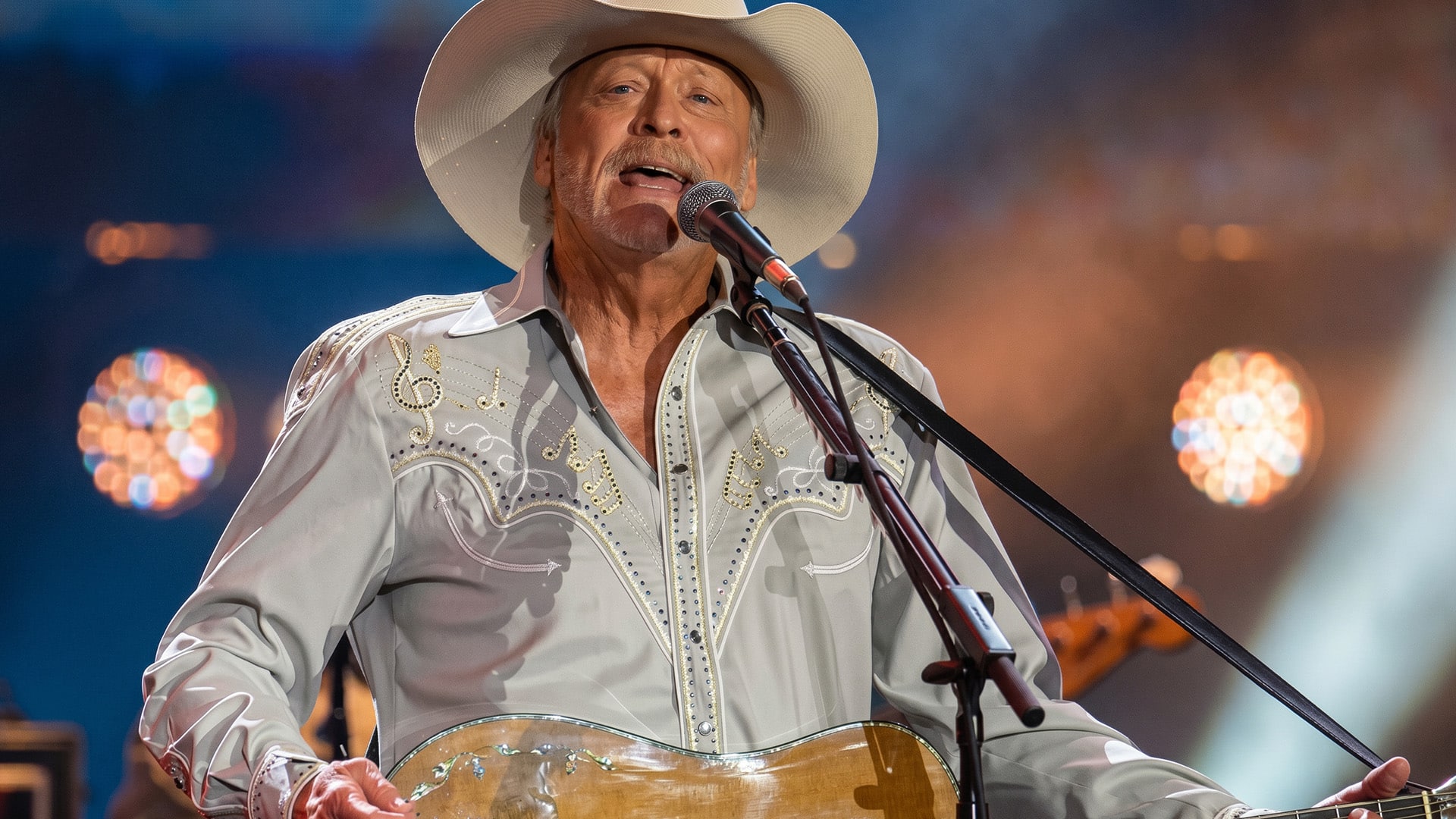
A Hall of Fame induction is often described in terms of accolades, but for Alan Jackson it feels more like acknowledgment of something lived in real time—songs released, stories told, and a career that built trust with its audience. Hall of Fame moments can sometimes feel like milestones for a single generation, but Alan Jackson’s case spans eras. His catalog is broad enough that it crosses into multiple “soundtrack chapters” of people’s lives: road trips, first loves, late-night reflections, and family gatherings where the same chorus gets sung without anyone needing to ask, “What’s the words?”
From a personal analysis perspective, what makes the induction especially meaningful is the alignment between the honor and the artist’s values. Alan Jackson didn’t build his career on constant reinvention. He built it on a consistent promise: to tell the truth as he saw it and to sing in a style that feels natural in the human voice. That consistency is difficult to sustain in any industry, especially one that often rewards novelty over patience. So when people celebrate Alan Jackson Country Music Hall of Fame legacy and tribute, they’re also celebrating a kind of professional integrity—an artist who stayed himself long enough to become a symbol of what “staying true” actually looks like.

Tributes to Alan Jackson: Celebrating a Career of Authenticity
Tributes to Alan Jackson tend to share a common theme: authenticity. Not the marketing version of authenticity—actual authenticity, the kind that shows up when a singer’s personality is audible even between the lines. Fans often describe his voice as “distinct,” but the deeper point is that it sounds familiar in a comforting way. He had the rare talent of making a wide range of emotions feel approachable. Even when the subject matter was heavy, there was no sense of manufactured despair; it sounded like a real human reflecting in real time.
One reason tributes resonate so strongly is that Alan Jackson’s songs function like conversation starters. A lot of country music can be enjoyed silently, but his material tends to invite participation—people remember the setting, the detail, the moment. That’s why tributes aren’t just about praising a singer; they’re about preserving a communal experience. When artists, radio hosts, and fans refer to Alan Jackson Country Music Hall of Fame legacy and tribute, they often talk about how his songs accompanied them, not merely how they impressed them. That difference matters. It’s the difference between admiration and belonging.
There’s also a craft-based authenticity at work. His lyric structure is clean, his hooks land without sounding like traps, and his storytelling includes specifics that don’t feel like clichés. Even his celebratory songs have a grounded texture—like they’re celebrating life, not just surface-level fun. That mix—salt-of-the-earth sincerity with unforgettable melody—is why tributes keep finding fresh angles. Decades later, people still hear something new because the writing doesn’t cheapen itself.
🤠 COMMUNITY VOICE
Who do you think deserves the crown for the Ultimate Country Legend?
Submit & See ResultsThe Unmistakable Sound: Alan Jackson’s Contribution to Country Music
Alan Jackson’s contribution to country music can be summarized by his ability to make “the sound” feel like “the story.” He didn’t use musical elements as decoration; he used them as meaning. The twang wasn’t only a sonic signature—it was a narrative signal. The groove wasn’t only catchy—it carried the emotional weight of the scene he was building. Whether it was the swing of a honky-tonk number or the steady pulse of a reflective ballad, the music supported the message in a way that felt instinctive.
It also helps that Alan Jackson’s approach to genre blends was tasteful. Country has always absorbed influences, but some artists absorb them so aggressively that the original identity gets diluted. Alan Jackson did something smarter: he incorporated modern accessibility while keeping the foundation firmly rooted in country tradition. The result is music that doesn’t need extensive explanation. You can hear it and know where it belongs. That’s a significant contribution to the genre, especially in a period when definitions can blur and purists feel threatened.

Personally, I think the “unmistakable sound” is partly about restraint. Some performers try to overwhelm you with charisma or technical showmanship. Alan Jackson’s charisma arrived through clarity—through the way he let the lyrics breathe, how he shaped phrases naturally, and how he trusted the band to sound like a living room rather than a stadium. This is why Alan Jackson Country Music Hall of Fame legacy and tribute feels so fitting: his musical identity is not just recognizable—it’s dependable. It sounds like country when you want country, and it sounds like a human when you want humanity.
Reflections on a Hall of Fame Career: Alan Jackson’s Impact
Reflecting on Alan Jackson’s Hall of Fame career invites a broader conversation about what impact means in music. Impact is not solely chart positions or awards, though those matter. Impact is the influence that travels outward: the way singers find courage in honesty, the way songwriters learn that simplicity can carry power, and the way radio formats preserve their identity because an artist proves it still connects. With Alan Jackson, you can see impact in the way his style became a reference point—something other musicians measure themselves against, especially when they want to stay grounded.
Another impact layer is cultural memory. Country music is often described as a genre of storytelling, but it’s also a genre of continuity—songs passed from one generation to another. Alan Jackson’s catalog has that “hand-to-hand” quality. It’s not just that older fans love it. It’s that younger fans often discover it and instantly understand the emotional grammar. They might not have lived the exact experiences referenced in the songs, but the feelings translate. That translation is part of why his legacy continues to hold.
When people talk about Alan Jackson Country Music Hall of Fame legacy and tribute, they’re also talking about the effect on live performance culture. His songs are communal by design. Many of them are written so that the audience can become the second vocalist—clapping, humming, singing along, and feeling part of the story. That kind of performance impact matters because it strengthens the relationship between artist and listener beyond the studio. Over time, that relationship becomes the foundation of a lasting reputation.
Lastly, there’s the moral dimension of his public image. Alan Jackson’s career is often remembered as respectful of the genre and respectful of the fan base. That doesn’t mean he’s perfect or untouched by the messiness of life; it means his work and persona fit the spirit of country music as many people understand it—faith, family, humor, and the steady dignity of showing up and telling the truth. In a world where music branding can feel slippery, he provided a steady anchor.
Honoring Alan Jackson: A Tribute to a Country Music Luminary
To honor Alan Jackson is to recognize him as a luminary not because he simply “made it big,” but because he clarified what big can mean without losing the heart of the craft. A luminary guides other artists and helps audiences feel confident in what they love. He made country music feel accessible without making it feel watered down. He proved that tradition isn’t automatically old-fashioned; sometimes it’s the most forward-looking option, because it carries proven emotional language.
His tribute-worthy qualities show up repeatedly in different angles of his career: the ability to write with specific imagery, the knack for pairing melody with meaning, and the talent for creating songs that remain quotable. Even listeners who don’t follow every release still recognize lines from his songs like they’re part of everyday vocabulary. That is a rare achievement—music that becomes conversational culture rather than a fleeting moment.
It’s also worth noting how his legacy behaves like a bridge. It connects people who grew up with classic country sounds to people who came of age during different musical phases. That bridge effect is essential for the longevity of a genre. If country music only survives in one era, it becomes a museum. Alan Jackson helped keep it alive as a living art form—one that still feels capable of expressing modern life while honoring older truth.
So when you consider Alan Jackson Country Music Hall of Fame legacy and tribute, you’re not only looking at a trophy case. You’re looking at a body of work that shaped how country music sounds, how it feels, and how it speaks. His influence has the quality of something renewable: it can be rediscovered repeatedly and still land with fresh emotional force.
Conclusion
Alan Jackson Country Music Hall of Fame legacy and tribute captures more than a celebrated induction—it reflects a career defined by authenticity, dependable storytelling, and an unmistakable country sound that helped shape the genre’s identity across generations; through enduring lyrics, audience-first songwriting, and a musical restraint that lets emotion take the lead, he proved that tradition can thrive while still feeling alive, and his impact continues to show up in the way fans connect to country music as a shared cultural language.