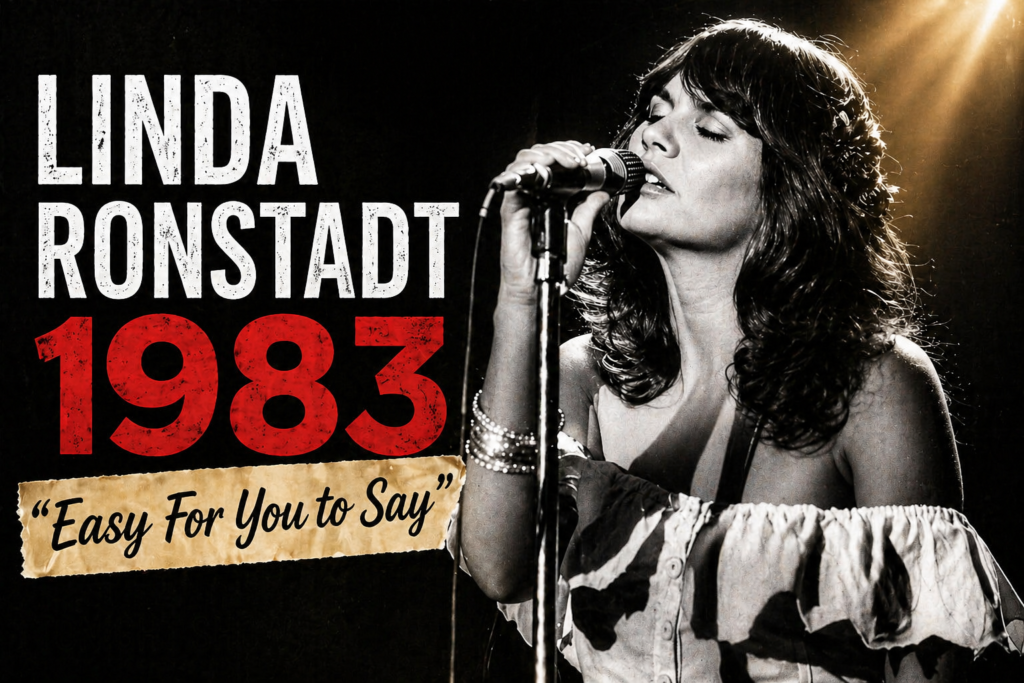
In the career of Linda Ronstadt, 1983 was not her peak in terms of commercial success, but it marked a notable moment in emotional expression. Her performance of “Easy For You to Say” on The Tonight Show on March 3, 1983 is often referenced as a clear example of restrained yet deeply nuanced singing.
It was not the scale of the stage or vocal display that made the performance enduring, but rather the simplicity in its delivery.
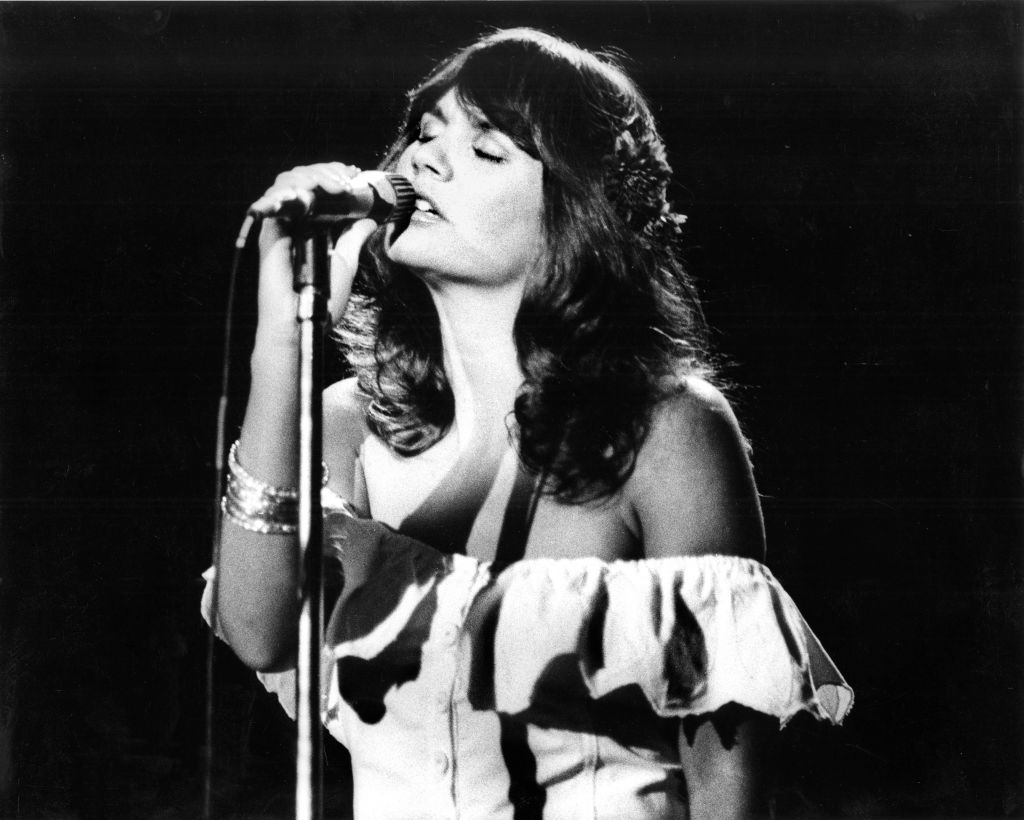
“Easy For You to Say” – A Familiar Song, An Unfamiliar Approach
“Easy For You to Say” carries a familiar theme: emotions after a breakup. However, in Linda Ronstadt’s 1983 version, the song was not pushed toward a conventional climax.

Instead of relying on vocal power or dramatic peaks, she approached the song almost conversationally. The tempo remained steady, phrasing was minimal, and lyrical delivery prioritized clarity over intensity.
This choice made the performance stand apart from many interpretations of the same era.


Linda Ronstadt on The Tonight Show: When Restraint Became the Focus
In the early 1980s, programs like The Tonight Show often favored performances that were immediate, accessible, and capable of generating quick audience reactions.
Ronstadt’s performance took a different direction. There were no dramatic volume shifts, no extended climactic passages. Instead, the entire piece was delivered with consistent emotional tone from beginning to end.
This created a listening experience that encouraged observation rather than immediate reaction. Music & Audio
🤠 COMMUNITY VOICE
Who do you think deserves the crown for the Ultimate Country Legend?
Submit & See ResultsWhy Linda Ronstadt’s 1983 Performance Is Still Analyzed
One reason this performance continues to be discussed is its use of “space” in music.
- Pauses between lines were left intact
- Volume remained controlled and steady
- Expression was measured rather than exaggerated
These elements allowed listeners to interpret the song on their own, rather than being guided toward a fixed emotional response.

From an analytical perspective, it demonstrates how reducing technical emphasis can shift attention toward the core message of a song.
The Context of 1983 and Ronstadt’s Artistic Position
By 1983, Linda Ronstadt had already established herself across multiple genres, including rock, pop, country, and traditional standards.
This versatility gave her the freedom to explore different approaches to performance. In “Easy For You to Say,” instead of showcasing vocal range or complexity, she maintained a consistent interpretive style throughout.
This approach aligned with a broader tendency among some artists of the time: reducing overt display to emphasize authenticity.
Where Is the Climax in “Easy For You to Say”?
In conventional song structures, the climax often appears near the end or in high notes. In this 1983 performance, that pattern is not followed.
Instead, what stands out is consistency:
- No sudden increase in volume
- No clearly defined “peak” moment
- No disruption in emotional flow
This continuity requires the listener to engage with the entire performance, rather than focusing on a single standout moment.
Looking back, this rendition of “Easy For You to Say” presents an alternative approach to musical performance on television:
- Not centered on technical display
- Not dependent on dramatic climaxes
- Focused on emotional continuity
While this approach may not resonate with every audience, it offers a different way of interpreting familiar material.

Conclusion: Why Linda Ronstadt 1983 Still Matters
The 1983 performance by Linda Ronstadt on The Tonight Show did not rely on large-scale impact, yet it continues to be revisited and analyzed over time.
This version of “Easy For You to Say” reflects a clear artistic decision: to reduce performative elements and preserve the song’s emotional structure.
That decision is what keeps the performance relevant in discussions about how music can be interpreted and presented—especially in the context of television in the early 1980s.
Get more King of Country updates on our Fanpage