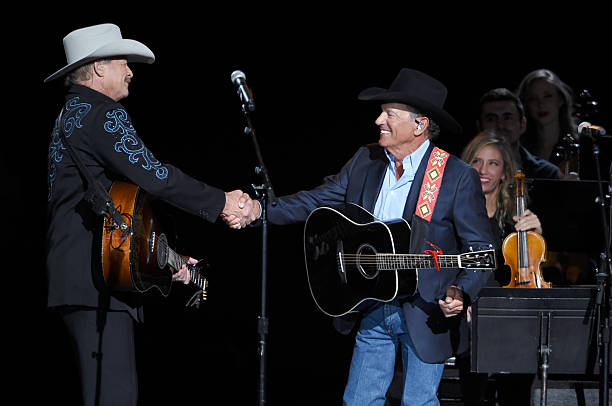
When it comes to traditional Country music, the 1980s and 1990s marked a golden resurgence. It was an era that stripped away the over-produced pop influences of the late ’70s and brought back the raw, honest twang of the steel guitar, the fiddle, and stories rooted in working-class American life. At the absolute forefront of this Neotraditional movement stood two towering titans: George Strait and Alan Jackson.
For decades, fans across the heartland of America have fiercely debated a single, tantalizing question: Who truly deserves the ultimate crown as the King of Country Music?
While George Strait has officially worn the moniker of “The King” for a generation, Alan Jackson’s deeply personal songwriting and unmatched cultural resonance make this a closer battle than most realize. Let’s dive deep into the legacies, the hits, and the raw impact of these two living legends to see how they truly measure up.

The Case for George Strait: The Undisputed King of Chords and Charts
To understand the sheer magnitude of George Strait’s legacy, you only need to look at the record books. With an astonishing 60 number-one singles across major country charts, the Texas native holds more number-one hits than any artist in any genre of music, history-wide. From “Amarillo by Morning” to “Check Yes or No,” Strait’s discography is the literal blueprint for modern cowboy anthems.
What makes Strait so legendary is his flawless execution of the traditional sound. He didn’t need flashy stage pyrotechnics, crossover pop duets, or dramatic media stunts.

Clad in his signature Wrangler jeans, a crisp button-down, and a perfectly shaped cowboy hat, Strait let his smooth, baritone voice and his Ace in the Hole Band do all the talking. For over forty years, he has remained the steady, unyielding anchor of country music.
The Case for Alan Jackson: The Soulful Poet of the Working Class
If George Strait is the master interpreter of great country songs, Alan Jackson is the master writer of them. Hailing from Newnan, Georgia, Jackson brought a distinctively soulful, small-town perspective to the genre. Unlike many of his peers, Jackson wrote or co-wrote a massive portion of his biggest hits, including timeless tracks like “Chattahoochee,” “Drive (For Daddy Gene),” and “Remember When.”
Jackson’s superpower has always been his ability to capture the profound beauty in ordinary American life. He sang about buying a used truck, learning to live on love, and the simple joy of a hot dog and a piece of fried bologna.
🤠 COMMUNITY VOICE
Who do you think deserves the crown for the Ultimate Country Legend?
Submit & See ResultsWhen tragedy struck the nation on September 11, Jackson channeled the collective grief of millions into “Where Were You (When the World Stopped Turning)”—a song so raw and emotionally honest that it cemented his place not just as a country star, but as an American cultural poet.
Performance and Longevity: A Parallel Journey of Greatness
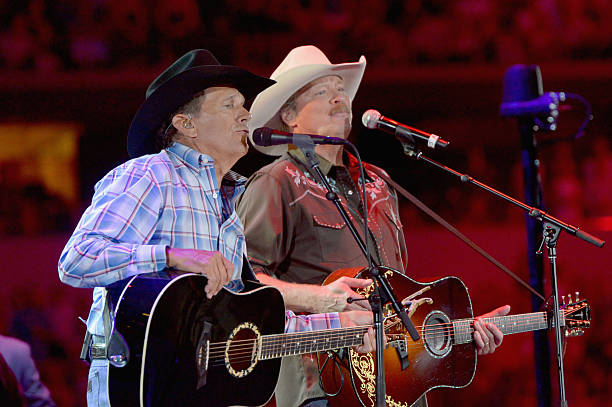
Both artists share an incredible mutual respect and have even shared the stage, most notably on their collaborative hit “Designated Drinker.” They both resisted the heavy pressure of the 2000s to pivot toward “Bro-Country” or pop-country hybrids, choosing instead to stay fiercely loyal to the traditional sounds that made them.

Strait brought a cinematic, stadium-filling cowboy charisma that could command a crowd of over 100,000 fans with just a tip of his hat. Jackson brought an intimate, front-porch sincerity that made every listener feel like they were sitting right next to him on a wooden swing, sharing a cold beer.
The Verdict: Who Gets Your Vote?
Deciding between George Strait and Alan Jackson isn’t just about comparing chart numbers or trophy cases. It’s about deciding what country music means to you. Is it the flawless, chart-topping Texan perfection of Strait, or the deeply personal, small-town songwriting genius of Jackson?
The experts can argue all day, but the only opinion that truly matters is yours. The community is split, and every single vote counts in deciding who walks away with the ultimate crown.